

You Got Hurt on Someone’s Property—What Can You Do?
A serious injury can happen almost anywhere. A wet floor in a grocery store, a broken stairway at an apartment complex, or uneven pavement in a parking lot can all create dangerous conditions. In Virginia, when a property owner's negligence causes someone to get hurt, the injured person may have what’s known as a “premises liability” claim. However, Virginia law can make it difficult to pursue one of these claims, so this article will explain how these claims work and what evidence is required, as well as the defenses property owners have to these claims.
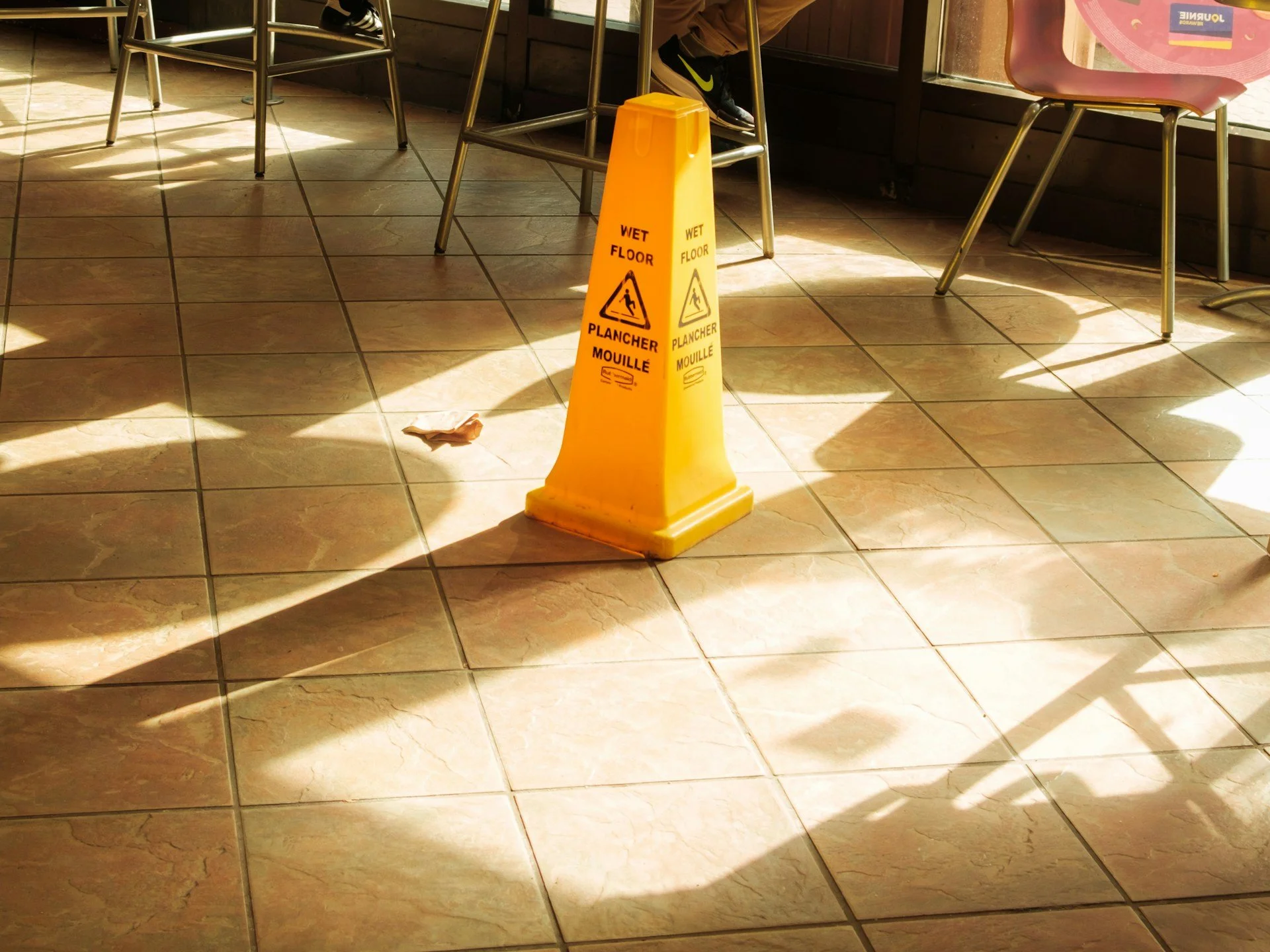
First, what is premises liability?
Premises liability is an area of personal injury law that holds property owners responsible for injuries to guests that occur on their property. This area covers claims that can occur in a wide variety of places, such as:
Retail stores
Restaurants
Apartment complexes
Hotels
Office buildings
Parking lots and garages
Private homes
Gyms and recreational facilities
As you might imagine, premises liability is a huge area of personal injury law because there are a seemingly infinite number of situations and places in which someone could get hurt.
What is a property owner’s responsibility to people on their property?
One of the most critical things to know about Virginia premises liability law is that the property owner’s responsbilities and duties to their guests vary depending on the circumstances. Specifically, the owner’s duties depend on the legal classification of the guest’s status on the property. In Virginia, there are three classes:
Trespasser. A trespasser is someone who is on someone’s property without their permission or consent. Property owners owe no duty to keep their premises safe for trespassers and, generally, don’t owe a duty to warn them of hazards or unsafe conditions. However, there is an exception for trespassing children in certain situations and a couple of other exceptions too—one of which is that a property owner can’t lay traps for people on their property, even for trespassers.
Licensee. A licensee is someone who is on someone’s property with permission but for the guest’s own benefit. An example of a licensee is a social guest (like a guest at a party), and the property owner’s duty is to warn the guest of known hazards, but the owner isn’t required to inspect the property to find unknown dangers.
Invitee. An invitee is someone who is on someone’s property with permission for the mutual benefit of both parties. A classic and often common example of an invitee is a shopper in a grocery store. Property owners owe invitees the highest duty of care. Like with a licensee, a property owner must warn invitees of known hazards, as well as hazards that they should have reasonably known about. They also must look for unknown or hidden dangers and maintain the property in a safe condition.
This classifications are critical to understand whether the property owner was negligent in causing someone’s injuries on their property because, depending on the nature of the hazard, the property owner may have a strong defense. These classifications, in addition to the defenses explained below, can make it difficult for an injury person to succeed on a premises liability claim. Not only does a legitimately dangerous condition have to exist, the other key issue—with respect to licensess and invitees—is that the property owner must be on notice or aware of the hazard.
What are common types of premises liability claims?
There are lots of types of premises liability claims. Here are some common examples:
Slip/Trip and Falls
These are probably what come to mind for most people when thinking about an injury on someone’s property: slipping on wet floors, slipping on snow or ice, or tripping over uneven sidewalks, potholes, or falling through defective flooring.
Falling Objects
A frequent occurence is something heavy falling off of a shelf that was improperly secured or stowed, which, especially when hitting someone on the head, can cause significant injuries.
Dog Bites/Animal Attacks
Getting attacked by someone’s dog in their home can, in some situations, serve as the basis for a premises liability claim.
Recreational/Theme Park Accidents
If something goes wrong at a trampoline park or a rollercoaster malfunctions and causes injuries, there may be a premises liability claim there too.
Gym Equipment Failures
Sometimes, weightlifting gyms fail to properly secure racks or maintain equipment, allowing incidents like a weight rack falling over onto someone, which can cause significant injuries. (You may be thinking about a liability waiver when you signed up to joing the gym—read our article about how these are generally unenforceable in Virginia.)
There are numerous other examples, but the idea is that injuries on someone’s property—whether a business’s property or an individual’s property—can generally be characterized as premises liability claims.
How do you prove a premises liability claim?
Like with all personal injury claims, a premises liability claim must be supported by sufficient evidence. However, unlike a car accident or some other types of personal injury cases, evidence for a premises liability claim can be hard to acquire or preserve. With many cases, if evidence, such as photos, documentation, or a report aren’t created at the time of the incident, then it may be challenging to prove that the hazard or dangerous condition existed as the injured person describes it. For example, if someone trips over a pothole in the ground and goes to the emergency room before taking any photos of the property, they may return and find that it has been repaired, weakening the evidence of the hazard’s severity.
But, let’s talk about what an invitee must prove if they’re injured on someone’s property.
First, they must prove that they were an invitee, meaning they were there for mutual benefit or for business purposes.
Second, they must prove that a dangerous condition or hazard actually existed on the property.
Third, they must prove that the property owner had notice of the hazard or should have discovered the hazard upon a reasonable inspection.
Finally, they must prove that the incident (slip and fall, trip, etc.) and injuries were directly and proximately caused by the hazard.
So, not only is evidence of the hazard’s existence required, the injured person must acquire evidence that the property owner knew of the hazard, as well as medical evidence that supports the injuries as being caused by the particular incident.
For example, let’s say someone slipped and fell on spilled milk in the grocery store. That person would probably be considered an invitee. It may seem obvious that because there’s liquid on the floor (something that most people would agree is a hazard), then the grocery store should be liable. However, a key question in this situation is how long the milk had been on the floor. If another customer spilled it 15 seconds before another person slipped on it, the grocery store likely has a strong defense because they didn’t know about it, and they could argue that not enough time had passed to inspect for spills in the aisles or clean up this one specifically. However, if the milk had been on the floor for 6 hours, there’s a good argument that the grocery store should have learned of the hazard through hourly inspections of the aisles, an employee eventually walking by it, or another customer informing the store.
What defenses do property owners have?
In addition to the evidentiary challenges an injured person faces just to prove their claim, a property owner has a variety of defenses that can effectively defeat many claims.
Lack of Notice
One of the most powerful and frequently available defenses is that the property owner simply didn’t know about the hazard or couldn’t have learned about it.
Open and Obvious Hazard
If the hazard or dangerous condition was so apparent to the injury victim that a reasonable person could have identified and avoided it, the property owner may be able to escape liability. For example, if a staircase is clearly missing steps, is uneven, or is missing a handrail, and someone decides to use it anyways, they property owner may be able to argue that the injured person should have known better than to use it. Or if there is a wet floor clearly marked by signage and the person walks through the water anyways and slips, the property owner can probably make the same argument.
Contributory Negligence
Contributory negligence is a defense in every kind of personal injury case in Virginia. It states that if the injured person is even 1% at fault for causing their own injuries, then they cannot recover any money in their personal injury case. We have a blog post dedicated to this issue that I recommend you read for further details.
Assumption of Risk
Another common defense is that, similiar to the open and obvious concept, if someone who recognizes a particular danger chooses to encounter it anyways instead of avoiding it, the property owner may be able to argue that the injury victim assumed the risk of that danger.
What kind of compensation is available in a premises liability claim?
When you’ve been injured on someone’s property, you may have incurred what are known as “damages.” Damages are the legal jargon for losses or harms caused by someone’s negligence. Broadly speaking, there are two big categories of damages: “economic” and “non-economic.”
Economic damages (also known as “special” damages) are the easy ones to understand because these are damages that already have a dollar sign next to them for their value. For example: $10,000 of medical bills or $1,500 of lost wages.
On the other hand, non-economic damages (also known as “general” damages) can be a little bit harder to understand. We can consider these the “human” damages that don’t have a dollar sign next to them—we have to assign a value ourselves, and it’s what a jury would have the responsibility of doing. These damages include pain and suffering, loss of enjoyment of life, humiliation, embarrassment, and inconvenience. For example, the pain from a broken leg can disrupt someone’s life, but that harm isn’t economic in nature. At a trial, a jury would be tasked with figuring how much that’s worth under the circumstances of the case.
There’s also a third category of damages, but it’s rare to obtain. These are called punitive damages. The first two categories described above (economic and non-economic damages) both are characterized as “compensatory” damages. As the name implies, those damages are meant to compensate you for the severity of your injuries and financial losses you’ve sustained. In contrast, punitive damages are less focused on you and, instead, are focused primarily on the conduct of the liable party. These are awarded only when the liable party has committed egregious conduct and are meant to punish and deter them (and others) from similar conduct.
The Bottom Line
Dangerous conditions on someone’s property can cause significant, life-changing injuries, but gathering the requisite proof can be a challenge for injury victims, and Virginia law is not necessarily favorable to the injured either. However, with the thorough and prompt investigation of a skilled personal injury attorney, a victim can increase their chances of success and receiving the compensation they deserve.
